Posts

Showing posts with the label record and replay

One Weird Trick to Shrink Your PANDA Malware Logs by 84%

When I wrote about some of the lessons learned from P ANDA Malrec 's first 100 days of operation , one of the things I mentioned was that the storage requirements for the system were extremely high. In the four months since, the storage problem only got worse: as of last week, we were storing 24,000 recordings of malware, coming in at a whopping 2.4 terabytes of storage. The amount of data involved poses problems not just for our own storage but also for others wanting to make use of the recordings for research. 2.4 terabytes is a lot, especially when it's spread out over 24,000 HTTP requests. If we want our data to be useful to researchers, it would be great if we could find better ways of compressing the recording logs. As it turns out, we can! The key is to look closely at what makes up a PANDA recording: The log of non-deterministic events (the -rr-nondet.log files) The initial QEMU snapshot (the -rr-snp files) The first of these is highly redundant and actually ...
100 Days of Malware

Image
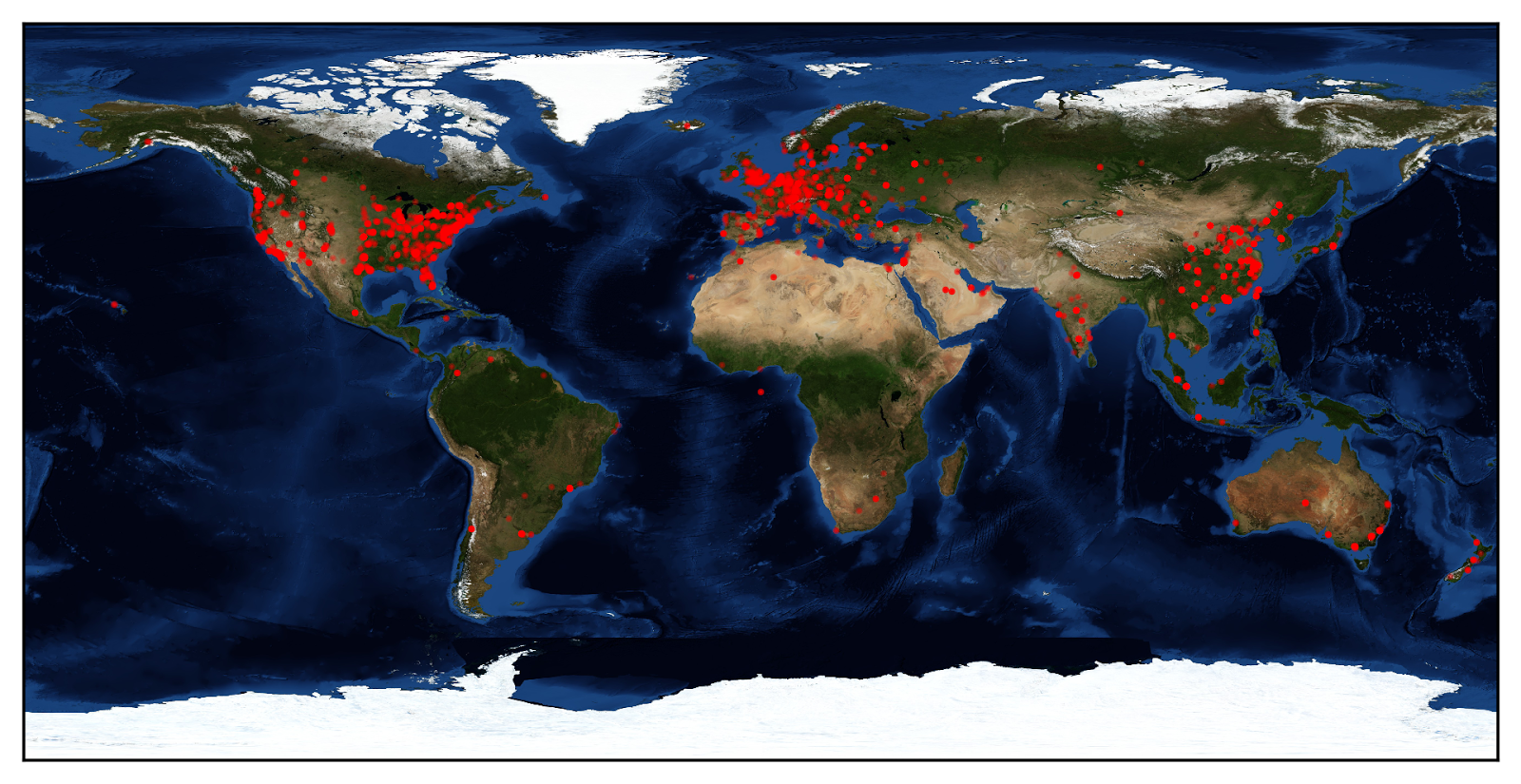
It's now been a little over 100 days since I started running malware samples in PANDA  and making the executions publicly available. In that time, we've analyzed 10,794 pieces of malware, which generated: 10,794 record/replay logs , representing 226,163,195,948,195 instructions executed 10,794 packet captures , totaling 26GB of data and 33,968,944 packets 10,794 movies , which are interesting enough that I'll give them their own section 10,794 VirusTotal reports , indicating what level of detection they had when they were run by malrec 107  torrents , containing downloads of the above I've been pleased by the interest malrec has generated. We've had visitors from over 6000 unique IPs, in 89 different countries: The Movies There's a lot of great stuff in these ~10K movies. An easy way to get an idea of what's in there is to sort by filesize; because of the way MP4 encoding works, larger files in general mean that there's more going on o...

Reproducible Malware Analyses for All

Summary : With help from GTISC , I have begun running 100 malware samples per day and posting the PANDA record & replay logs online at http://panda.gtisc.gatech.edu/malrec/ . The goal is to lower the barriers to entry for doing dynamic malware research, and to make such research reproducible . Today, I spoke at the ACSAC Malware Memory Forensics workshop in New Orleans about a problem that I think has been largely ignored in existing dynamic malware analysis research: reproducibility . To make results reproducible, a computer science researcher typically needs to do three things: Carefully and precisely describe their methods. Release the code they wrote for their system or analysis. Release the data the analysis was performed on. Of course, even research published at top conferences may fail at some of these criteria; a recent study by Collberg et al. attempted to obtain the code associated with 613 recent papers from ACM conferences, and were able to obtain, build and...

Replaying Regin in PANDA

Regin, a piece of state-sponsored malware that may have been used to attack telecoms and cryptographers, has recently come to light. There are several good writeups out there, and I encourage you to check them out. Getting access to samples in cases like this is often a challenge. Luckily, both The Intercept and VXShare  ( warning : both links contain live malware) have released samples thought to be associated with Regin, so that others can perform independent analysis. So far, it appears that the samples are all of the "stage1" component of the malware, rather than the initial "stage0" infector or the later stages. In order to allow others to do dynamic analysis of this malware, I built a very small malware sandbox setup using PANDA. The sandbox essentially just executes a sample for five minutes, recording it using PANDA's record and replay facility. The process is slightly complicated by the fact that most of the stage1 samples are kernel-mode compo...

Breaking Spotify DRM with PANDA

Image
Disclaimer : Although I think DRM is both stupid and evil, I don't advocate pirating music. Therefore, this post will stop short of providing a turnkey solution for ripping Spotify music, but it will fully describe the theory behind the technique and its implementation in PANDA. Don't be evil. Update 6/6/2014: The following post assumes you know what PANDA is (a platform for dynamic analysis based on QEMU). If you want to know more, check out my introductory post on PANDA . This past weekend I spoke at REcon, a conference on reverse engineering held every year in Montreal. I had a fantastic time there getting to meet other people interested in problems of memory analysis, reverse engineering, and dynamic analysis. One of the topics of my REcon talk was how to use PANDA to break Spotify DRM, and since the video from the talk won't be posted for a while, I thought I'd write up a post showing how we can use PANDA and statistics to pull out unencrypted OGGs from Spotif...

Announcing PANDA: A Platform for Architecture-Neutral Dynamic Analysis

I'm pleased to announce the initial release of a new open source dynamic analysis platform built on QEMU, named PANDA (Platform for Architecture-Neutral Dynamic Analysis) . It has a number of features that combine to make it a uniquely powerful platform for analyzing software as it executes: Record and Replay : PANDA is capable of recording the non-deterministic inputs during a whole-system execution and later deterministically replaying them. This means that heavyweight analyses that would be too slow to run on a live execution can be decoupled to run on the replayed execution instead. We recently used this in our 2013 ACM CCS paper to monitor every memory access made by an OS and applications, which would not have been feasible without record and replay. Record and replay is currently supported for i386, x86_64, and ARM, with more architectures planned. For more details see the record and replay documentation . Android Support : Thanks to excellent work by Josh Hodosh, PAND...

What I Did on My Summer Vacation

Over the summer I worked at Microsoft Research , which has a fantastically smart bunch of people working on really cool and interesting problems. I just noticed that they've posted the video of my end-of-internship talk,  Monitoring Untrusted Modern Applications with Collective Record and Replay . Please take a look if you're curious about what it might look like to try and monitor mobile apps in the wild with low overhead!